



Workforce Pell Operational Infrastructure
Real promise, real risk
States are being asked to stand up program approval and ongoing certification processes, engage employers in defining hiring requirements, and build modern data systems that can verify outcomes over time—while keeping equity and student experience at the center.
Opening the funding spigot can unintentionally send dollars toward programs that don't lead to good jobs unless the infrastructure behind it is strong. The programs that scale well will be the ones that can prove quality, alignment, and outcomes without adding unsustainable overhead.
Workforce Pell can be a catalyst for better skills targeting—but only if the operational backbone is in place. Turbine is building to make that backbone practical: less manual burden, more defensible quality, and better visibility into outcomes for learners and employers.
Operations, compliance, and reporting—built for Workforce Pell
Standardized delivery across many short programs
TurbineLMS delivers Workforce Pell-aligned training with consistent structure and measurable progress—producing the evidence layer that quality monitoring depends on.
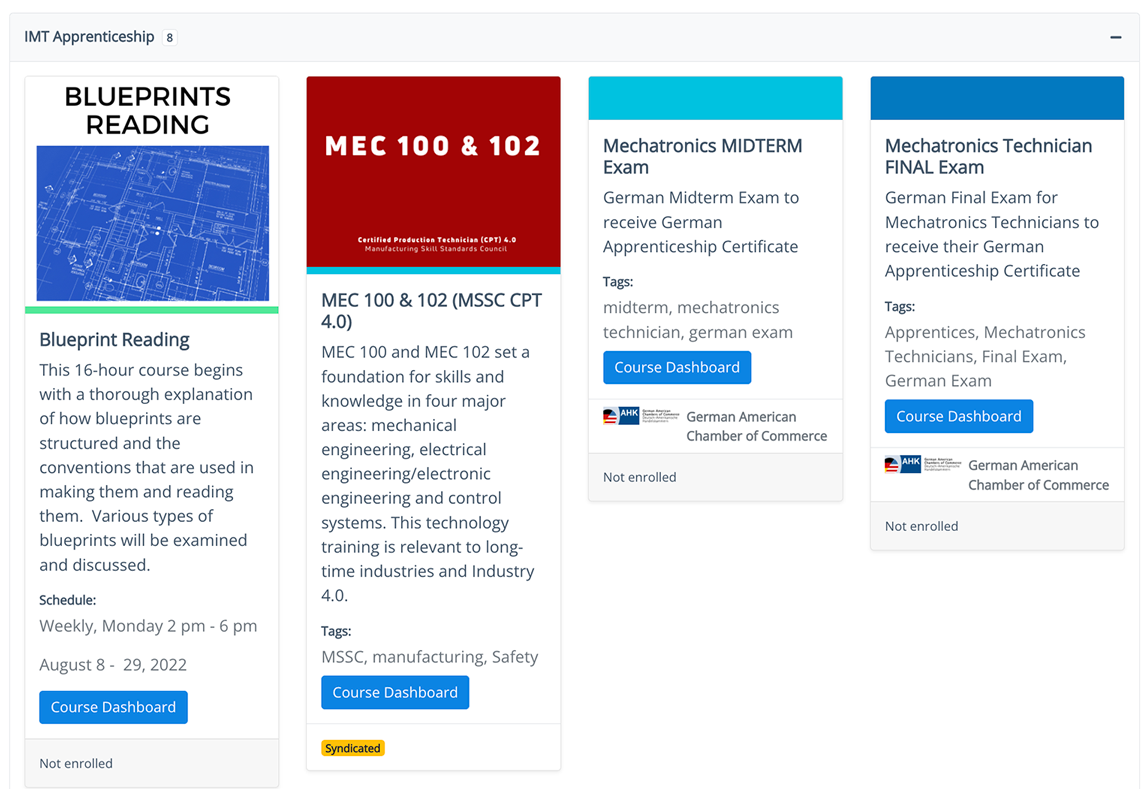
Course catalog built for many short programs across many partners: consistent modules, assessments, and completion definitions that feed ComplianceOps validation
Compliance validation, monitoring, and reporting
See how Turbine turns Workforce Pell requirements into repeatable workflows with continuous monitoring and audit-ready outputs.
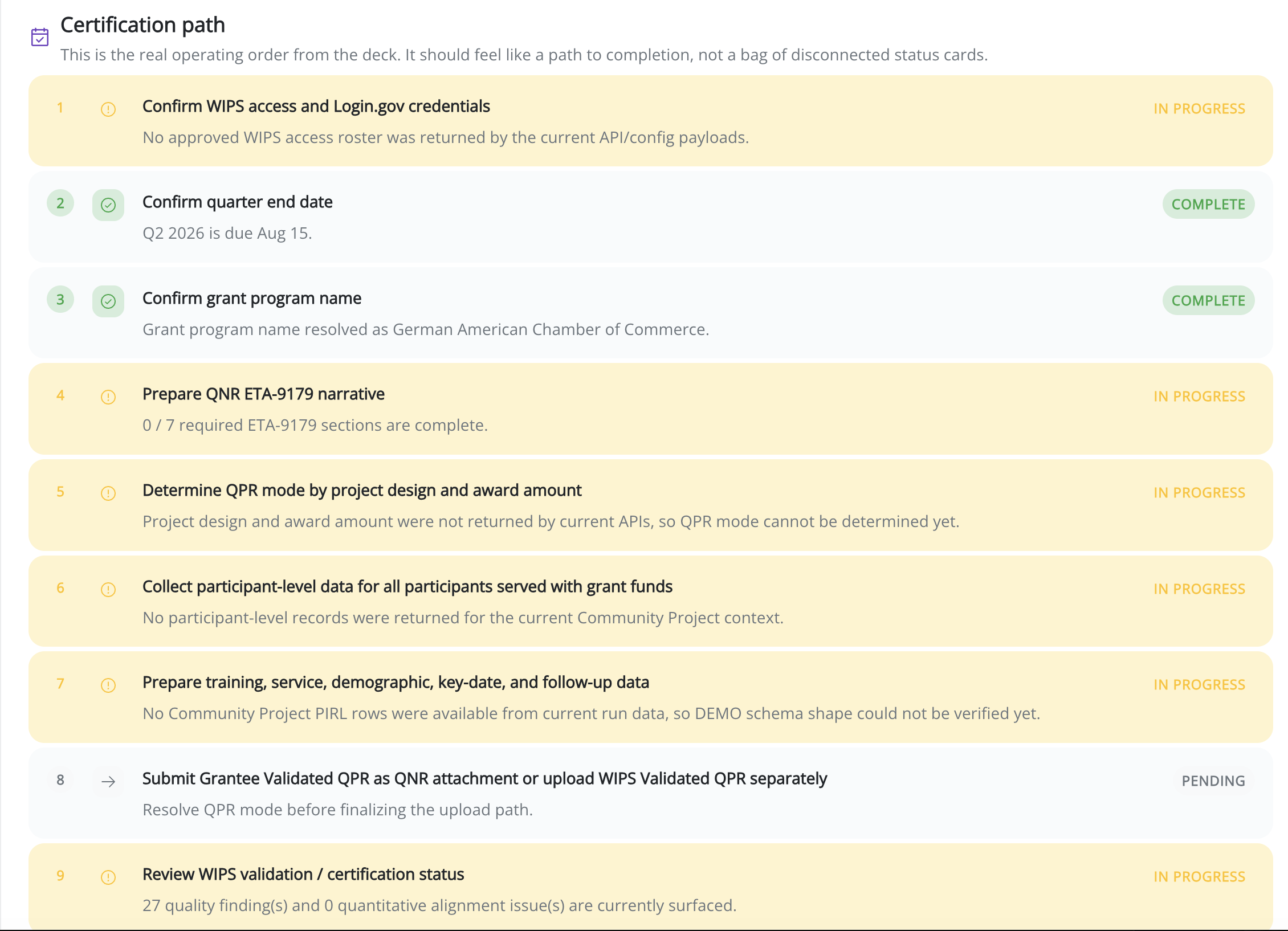
Unified compliance command center: Bring reporting readiness, validation findings, deadlines, and evidence gaps into one workspace
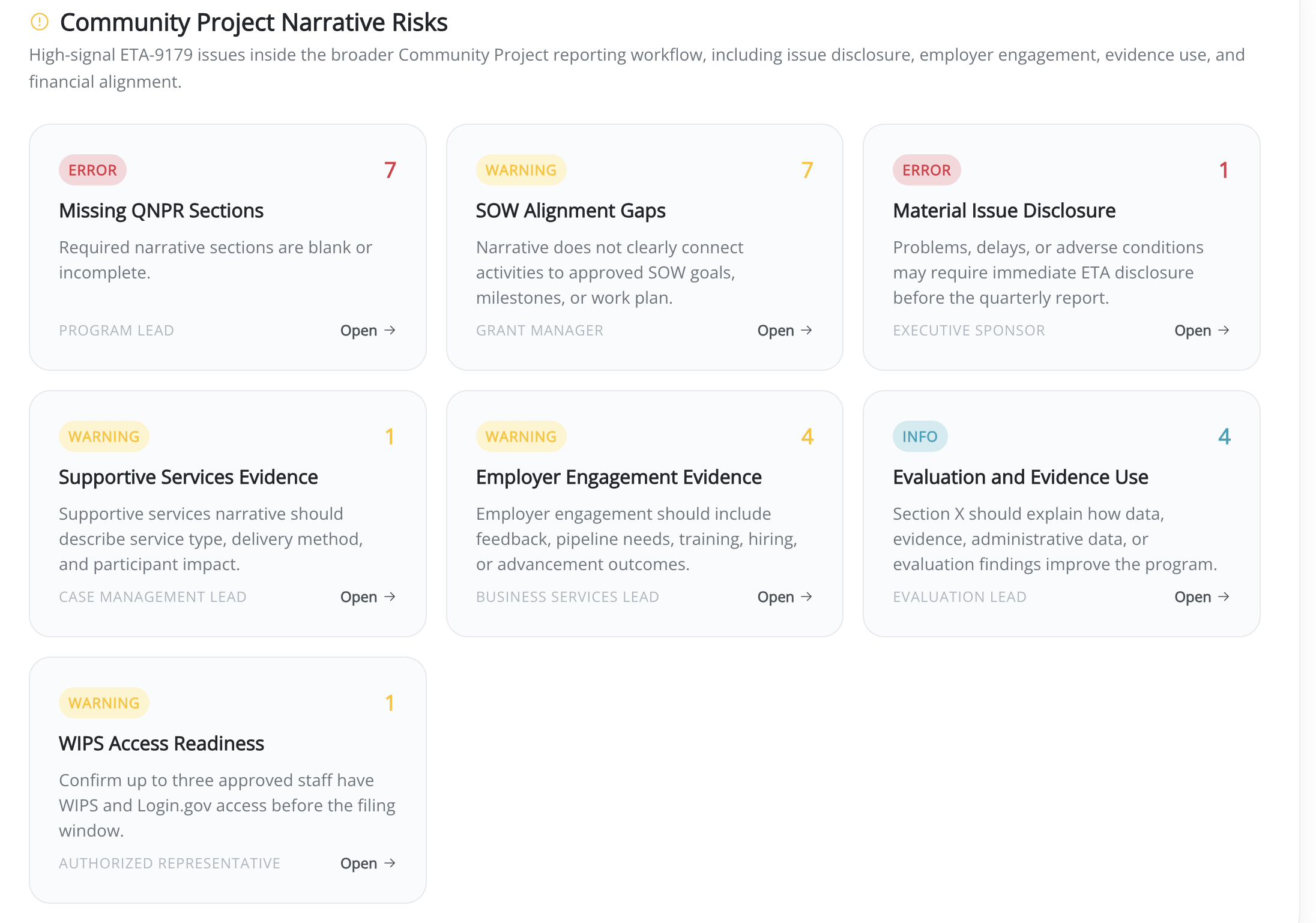
Prioritized compliance alerts: Turn signals across reporting, certification, and oversight into ranked next actions with clear rationale
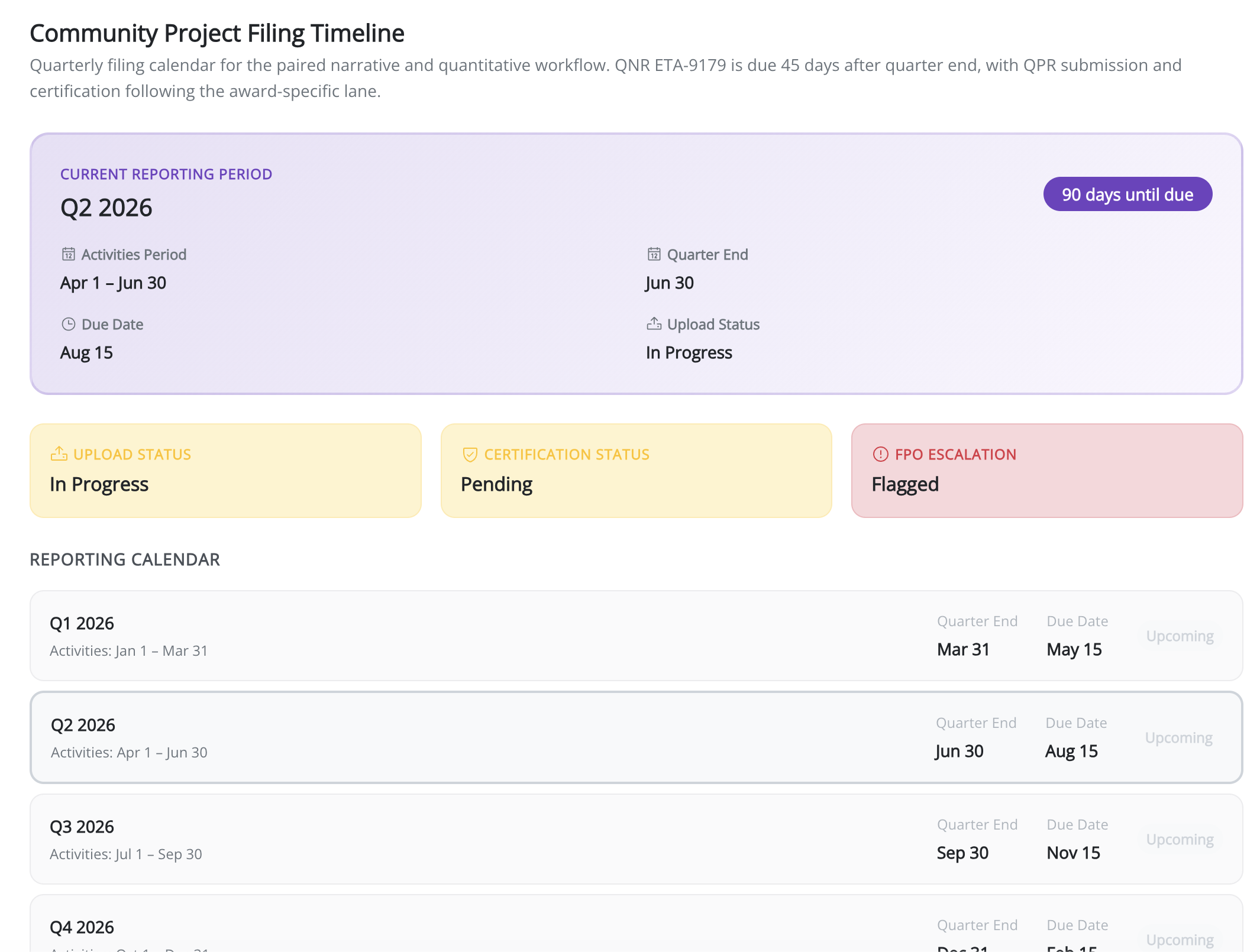
Real-time program monitoring: Track completion and placement thresholds to flag drift early—before re-approval deadlines
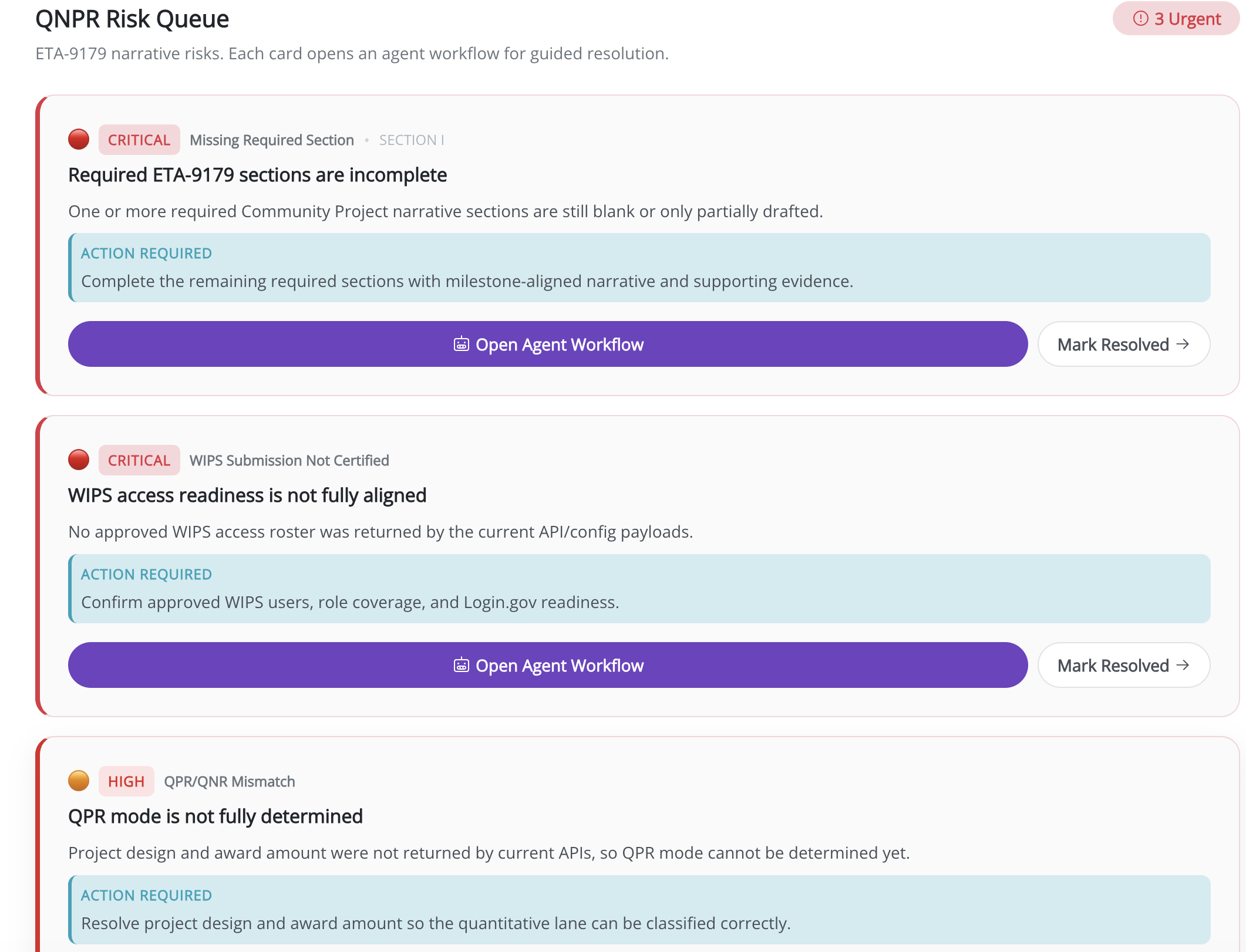
Eligibility validation workflows: Turn requirements into testable checks with structured evidence packets and audit trails
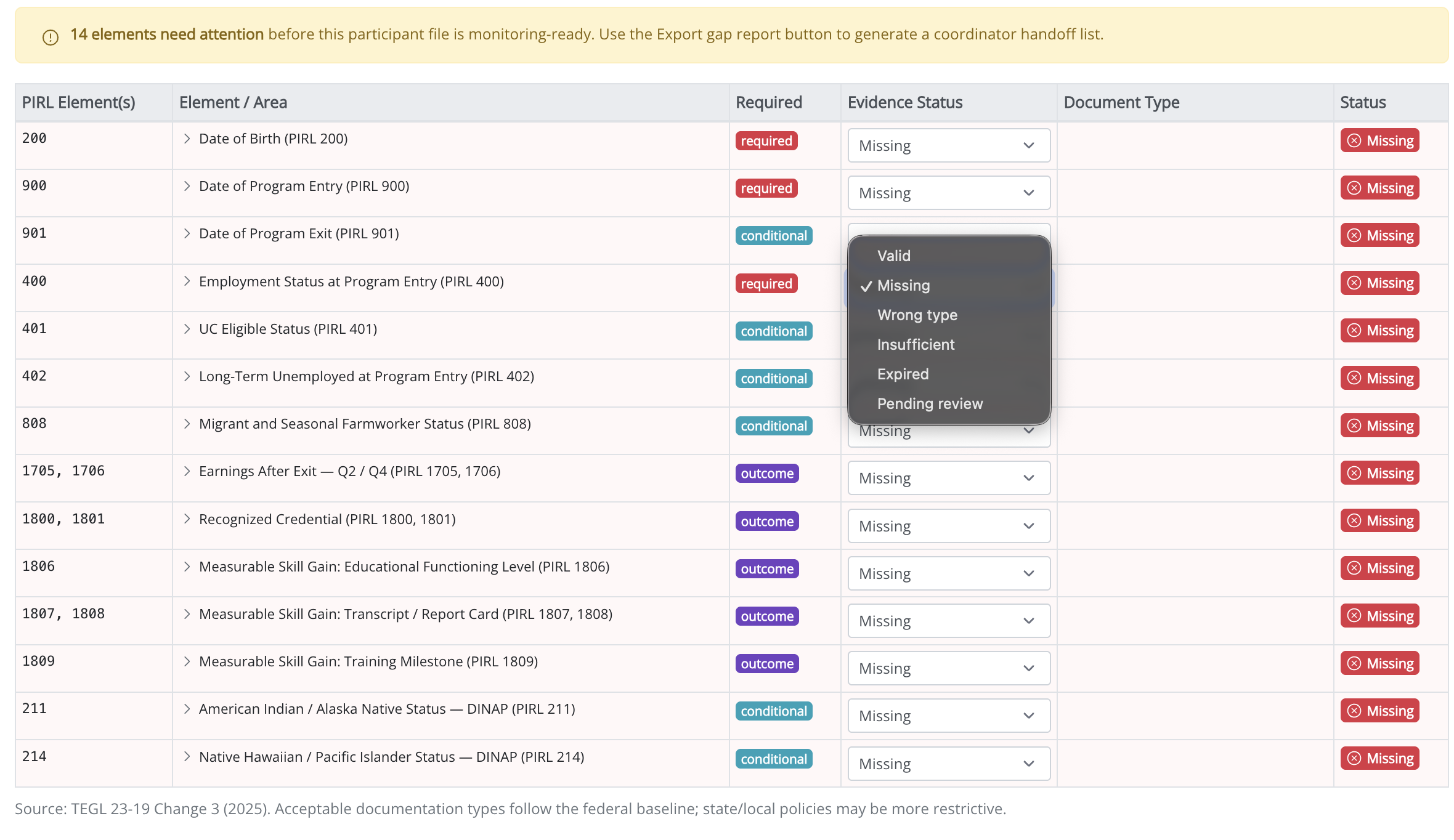
Participant compliance monitoring: Track individual eligibility, enrollment status, and evidence completion across all active program participants
What Turbine brings to Workforce Pell implementation
| Component | What it does | How it's built | Why it matters |
|---|---|---|---|
| TurbineLMS | Deliver short-term training with portable structure | AI-assisted course building, rapid deployment, and workforce-first design—built for many short programs across many partners, not semester-length academic assumptions. | Standardized delivery, consistent progress capture, and the base layer of program evidence that quality monitoring depends on. |
| ComplianceOps | Prove eligibility, performance, and equity with audit-ready evidence | Validation workflows, automated rules-based checks, compliance-oriented exports, and equity analytics aligned to workforce reporting structures. | Quality assurance becomes a daily workflow—validated inputs, consistent definitions, and defensible outputs that hold up when a state reviewer asks hard questions. |
| OJTOps + VELA | Make employer alignment operational, not aspirational | Competency frameworks with role-based sign-off, voice-enabled worksite logbooks, and minimal friction at the point of work. | Employer partnership claims backed by structured evidence—what workers did, when, and who verified it—captured in real time rather than reconstructed at review. |
| ReportingOps | Package outcomes for state oversight and employer partners | Clear dashboards and export-ready reporting for state review, employer visibility, and institutional leadership—built from the same validated data that feeds ComplianceOps. | Supports transparency and continuous refinement as Workforce Pell matures—without rebuilding reports from scratch each cycle. |
| Employer-Curated AI | Keep training grounded in what employers actually need | Governed AI assistants built from employer SOPs, policies, and training content—deployed without code, updated as operations evolve. | Short-term programs stay current with employer expectations instead of drifting toward generic curriculum over time. |
How Turbine maps to the Workforce Pell quality agenda
State obligations → Turbine support → Operational angle
Organized by the state obligations and implementation areas called out in the NSC Workforce Pell brief (May 2026).
| Operational Area | State / Implementation Need | How Turbine Supports | Angle |
|---|---|---|---|
| 1 Program eligibility intake and approval | States must have a process for programs to request review, define required data, and certify continued approval over time. |
| Reduce friction so programs can be offered, without states building bespoke spreadsheets and portals. |
| 2 Federal guardrails verification | Eligible programs must meet hard constraints: operating ≥1 year, 150–600 clock hours / 8–15 weeks, alignment to high-skill/high-wage/in-demand occupations, verified hiring requirements, and ongoing 70% completion + 70% placement thresholds. |
| Make compliance continuous rather than a last-minute eligibility scramble. |
| 3 Training delivery and learning evidence | Workforce Pell programs must be demonstrably high-quality and connected to job outcomes—not just seat-time. |
| LMS telemetry becomes part of the state's "modern data" backbone. Workforce Pell doesn't work if training quality can't be observed. |
| 4 Employer hiring-requirements verification | States must determine whether programs meet employer hiring requirements and get direct employer input; credentials should be portable across employers. |
| Move from "we talked to employers" to "here's structured evidence of employer demand and ongoing relevance." |
| 5 Credential stackability, portability, and articulation | States must define and operationalize stackability and portability, ensure students receive transferable credit, and apply credential quality criteria. |
| Make "stackable" a trackable pathway, not a narrative claim. |
| 6 Job placement tracking and outcomes verification | States need decisions on how to track placement outcomes, including wage record links, cross-state employment, and the known data gap in noncredit programs. |
| Reduce the operational data gap that commonly blocks noncredit and short-term program accountability. |
| 7 Data ecosystem, governance, and transparency | States must strengthen data collection, sharing, analysis, reporting, and governance; ensure transparency so program and outcome data are accessible. |
| A Workforce Pell rollout needs trustworthy data flows, not just more data. |
| 8 Equity monitoring and student-centered implementation | Disaggregate outcomes by race/ethnicity/gender/age/disability/geography; use data to close gaps; ensure a broad range of programs and populations benefit; include student feedback loops. |
| Operationalize equity as monitoring and action, not just a principle. |
| 9 Managing the wage threshold tension | Wage thresholds can improve quality but may exclude essential roles or on-ramps. States may create program categories and refine policy over time based on outcomes. |
| Make refinement possible—because the data is already structured and comparable. |
From validation to reporting: audit-ready outputs
ComplianceOps validation feeds directly into ReportingOps dashboards, supporting state oversight, employer transparency, and institutional leadership—without rebuilding reports from scratch each cycle.
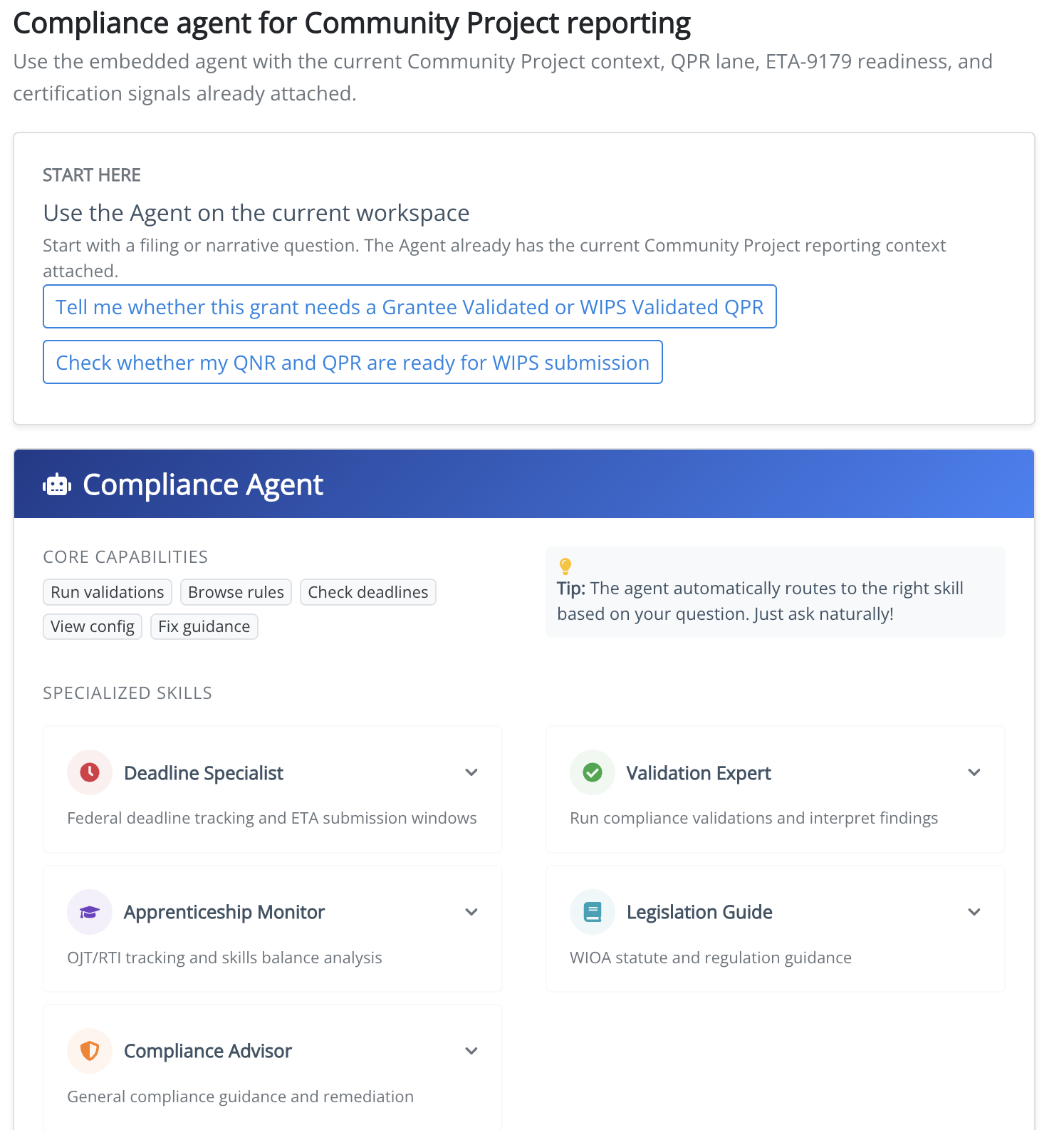
Export-ready reporting for state oversight: Prepare federal submissions with AI-drafted content grounded in validated program data
Infrastructure for scaling short-term training without losing governance
- TurbineLMS standardizes delivery and captures progress across many short programs and partner organizations—producing the evidence layer that quality monitoring depends on.
- ComplianceOps validates records continuously, automates rules-based checks, and produces auditable outputs so reporting is built into operations, not bolted on at the end.
- OJTOps and VELA create the operational record behind employer alignment—structured competencies, verified evidence, and outcome visibility that holds up to scrutiny.
- Equity analytics surface who is not benefiting early enough to intervene—before programs fall out of compliance or quality expectations.