



Managed Apprenticeship Operations
End-to-end intake, evidence capture, and reporting in one governed system for sponsors and intermediaries.
Built for teams that need one accountable operating layer across apprenticeship setup, delivery, compliance, and reporting.
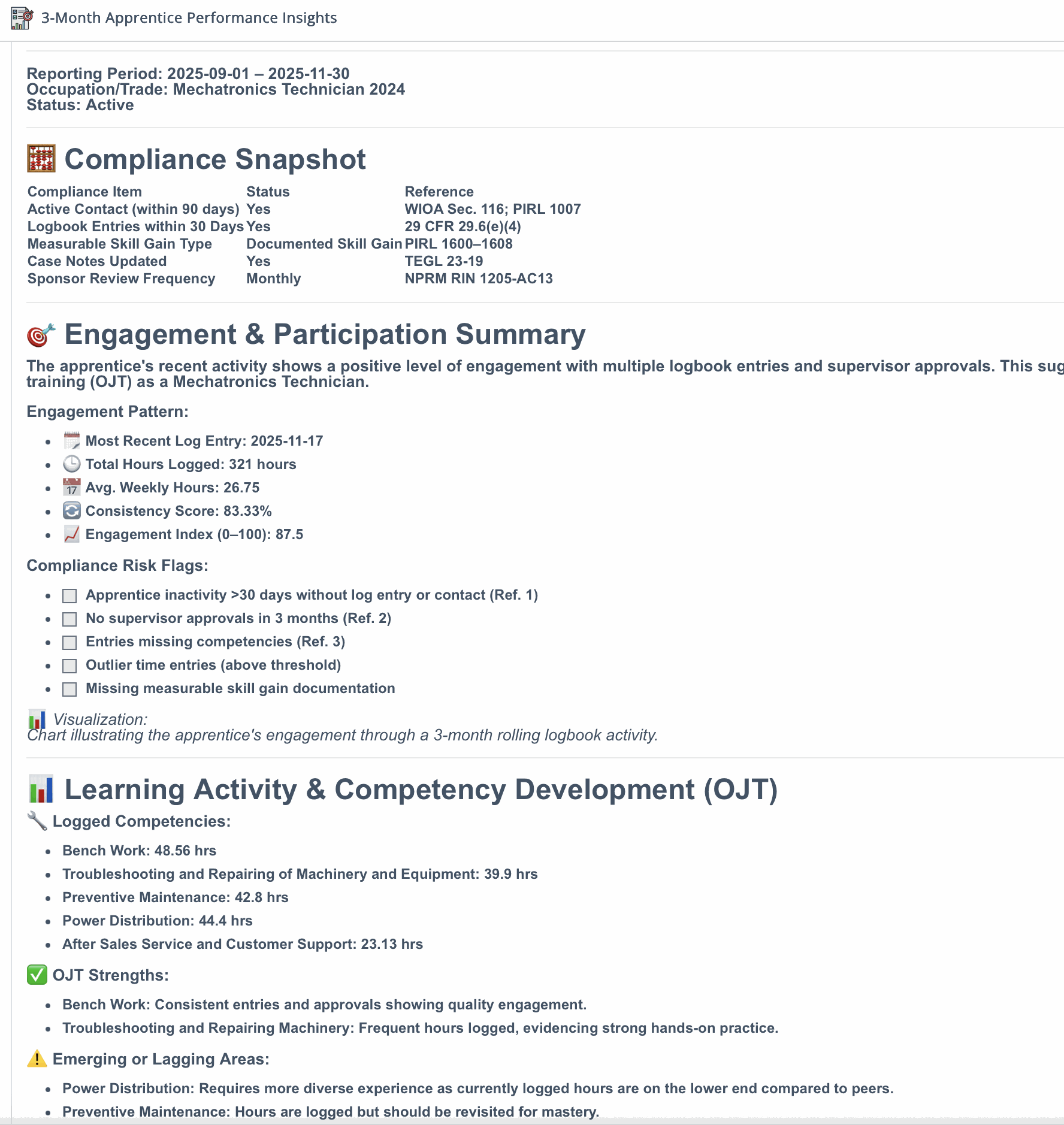
Sponsors + LWDBs
Operate apprenticeship delivery
Clean records and faster reporting
Apprentage at a Glance
One governed system for apprenticeship operations, evidence, and reporting.
Programs, people, and training.
Data, evidence, and approvals.
Exports backed by source records.
One system for running apprenticeship operations
Intake, records, evidence, and reporting stay in one workflow.

Apprentage synchronizes records, evidence, workflows, and reporting rules in one system.
- Payment holds and delayed reimbursements
- Monitoring findings that trigger corrective action
- Weaker renewals and follow-on awards
- Missed targets—even when delivery was strong
- Validates data at intake—before errors enter reporting
- Captures timestamped OJT evidence with documentation and verification
- Maintains audit-ready records with complete traceability
- Generates submission-ready RAPIDS, PIRL, and ETA exports
- Flags validation errors before submission deadlines
- Reporting specialists
- Compliance teams
- Program managers
- Sponsors coordinating data
Validates data at capture, links every record to source documentation, and eliminates disconnected spreadsheets. Built-in data quality ensures reporting withstands monitoring and audit.
States are asking programs to scale with more discipline, not more paperwork
As of April 20, 2026, the operating pressure is clear: apprenticeship systems need stronger sector alignment, cleaner equity and EEO practices, and better coordination across sponsors, employers, and training partners.
- States are being pushed to expand Registered Apprenticeship and quality pre-apprenticeship pathways with stronger sector alignment.
- Equity, EEO, and partner coordination expectations are rising at the same time operational complexity is increasing.
- Programs need a delivery model that keeps intake, RTI, OJT evidence, compliance, and reporting connected from the start.
Governed evidence pipelines
Apprentage captures work as evidence, structures it in role-based workflows, validates it before errors spread, and turns it into compliance-ready reporting. That is the product logic behind Turbine’s modular operating layers: KnowledgeOps, LearningOps, OJTOps, ComplianceOps, and ReportingOps.
Employer-first apprenticeship OS
Run apprenticeship without forcing frontline teams into disconnected admin workflows.
- One interface for standards, registration, RTI, OJT hours, stakeholders, compliance, and reports
- VELA captures real-time OJT evidence with transcripts, competency tags, and mentor approvals
- Dashboards turn retention, proficiency, and ROI into visible operating signals
Intermediary-scale sponsor operations
Maintain sponsor-by-sponsor separation while keeping portfolio-level visibility and control.
- Multi-tenant architecture and role-based access keep each program in its own lane
- Exception dashboards surface at-risk apprentices, missing logbooks, and engagement gaps
- Repeatable launch kits help new pathways go live without rebuilding the operating model each time
Compliance-ready workforce operations
Scale reporting and audits without relying on quarter-end spreadsheet cleanup.
- ComplianceOps and ReportingOps automate validation, audit trails, and export workflows
- RAPIDS, PIRL, and ETA-aligned outputs stay tied to source records and deadlines
- Governance controls, privacy posture, and human review make AI use defensible in regulated environments
RTI delivery and faster curriculum production
Deliver and track RTI without taking months to create or update course content.
- Turbine LMS and LearningOps align RTI to apprenticeship pathways and completions
- Course Builder converts source documents into structured learning and assessments quickly
- RTI provider onboarding and export mapping keep delivery aligned to program operations
Operational intelligence for workforce execution
Move beyond static records and see what is happening now across delivery, risk, and outcomes.
- ReportingOps produces recurring rollups, dashboards, and narrative summaries from live program data
- The Turbine data layer connects knowledge, learning, work evidence, compliance, and reporting
- Teams can monitor readiness, compliance, retention, and ROI as one observable system
Validation in Action
Follow the flow from intake to submission: required fields, source documentation, and audit-ready exports in one governed system.
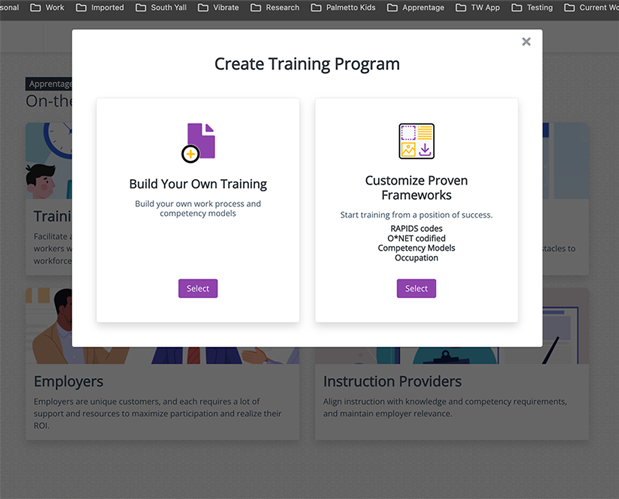
Clone or Build Anew
Import pre-validated occupational frameworks with required fields and validation rules already configured.
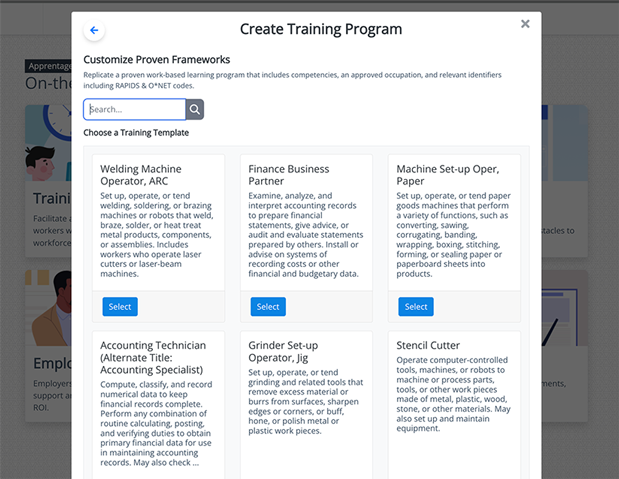
Clone Successful Programs
Start from validated templates (O*NET or RAPIDS) with schema alignment built in.
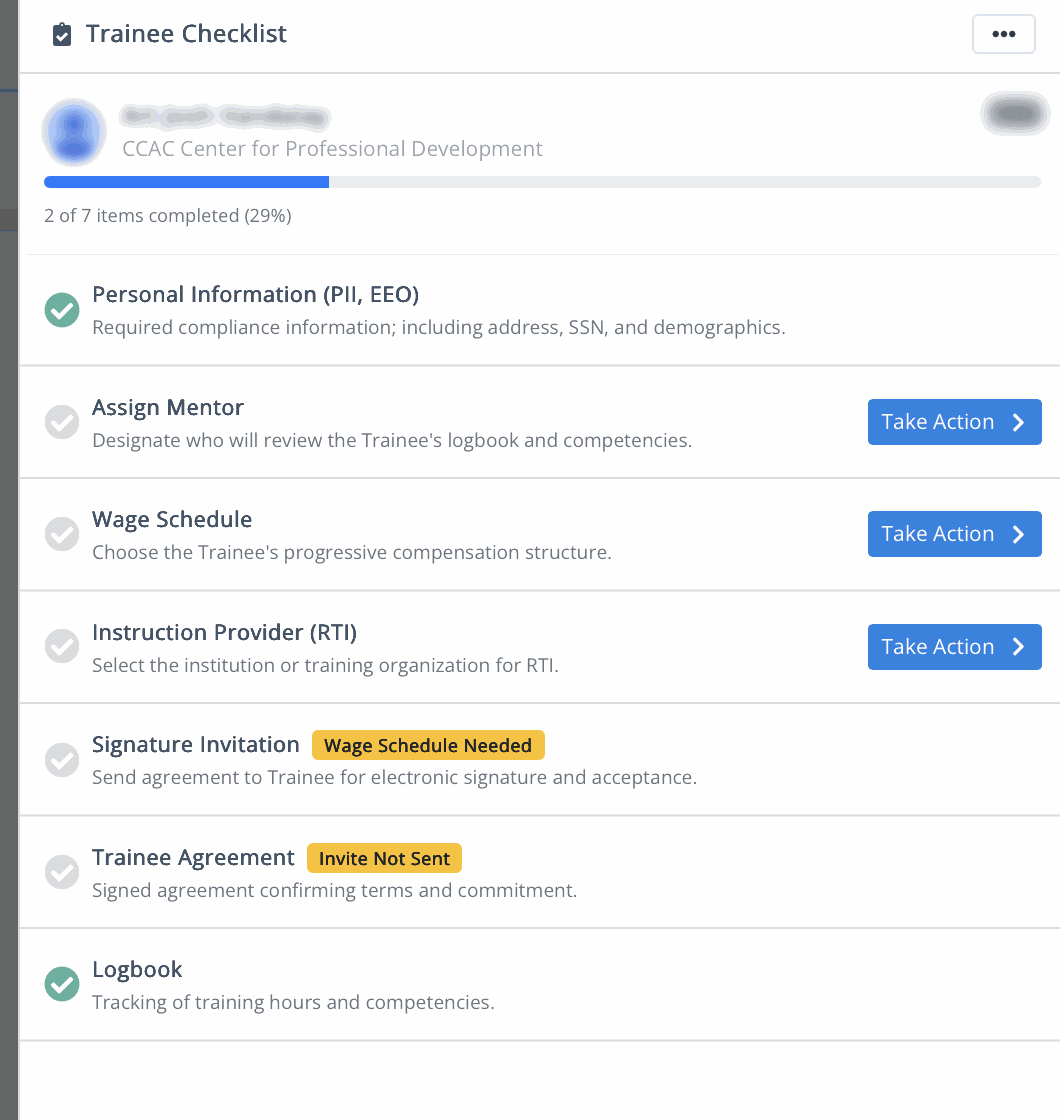
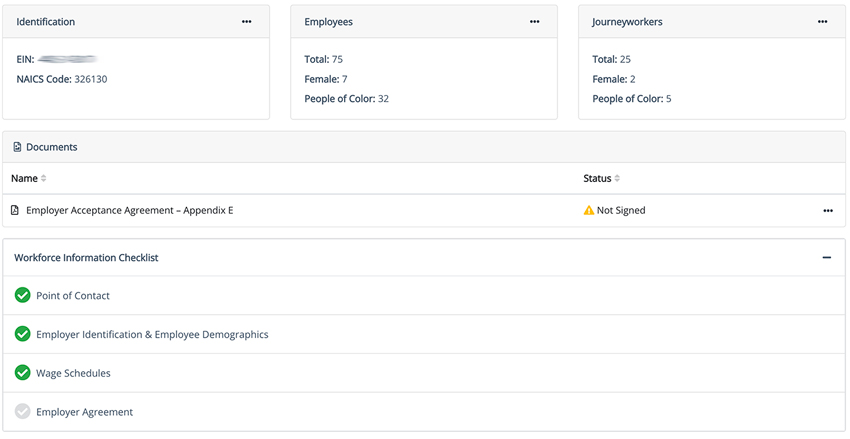
Validated Onboarding
Enforce required fields at intake. Every participant record meets schema requirements before entering your reporting pipeline.
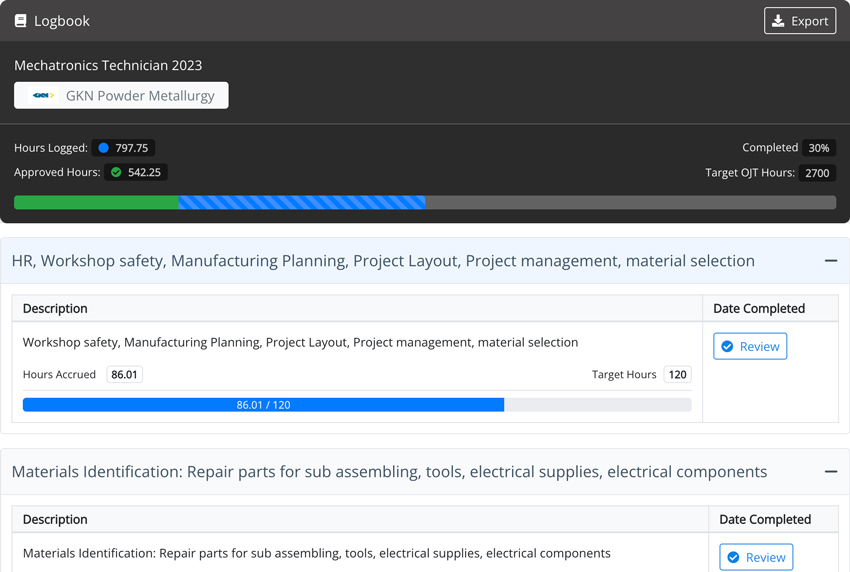
Validated Logbooks
Logbook data validated at entry with source documentation and supervisor verification. Reduce quarter-end cleanup and rework.
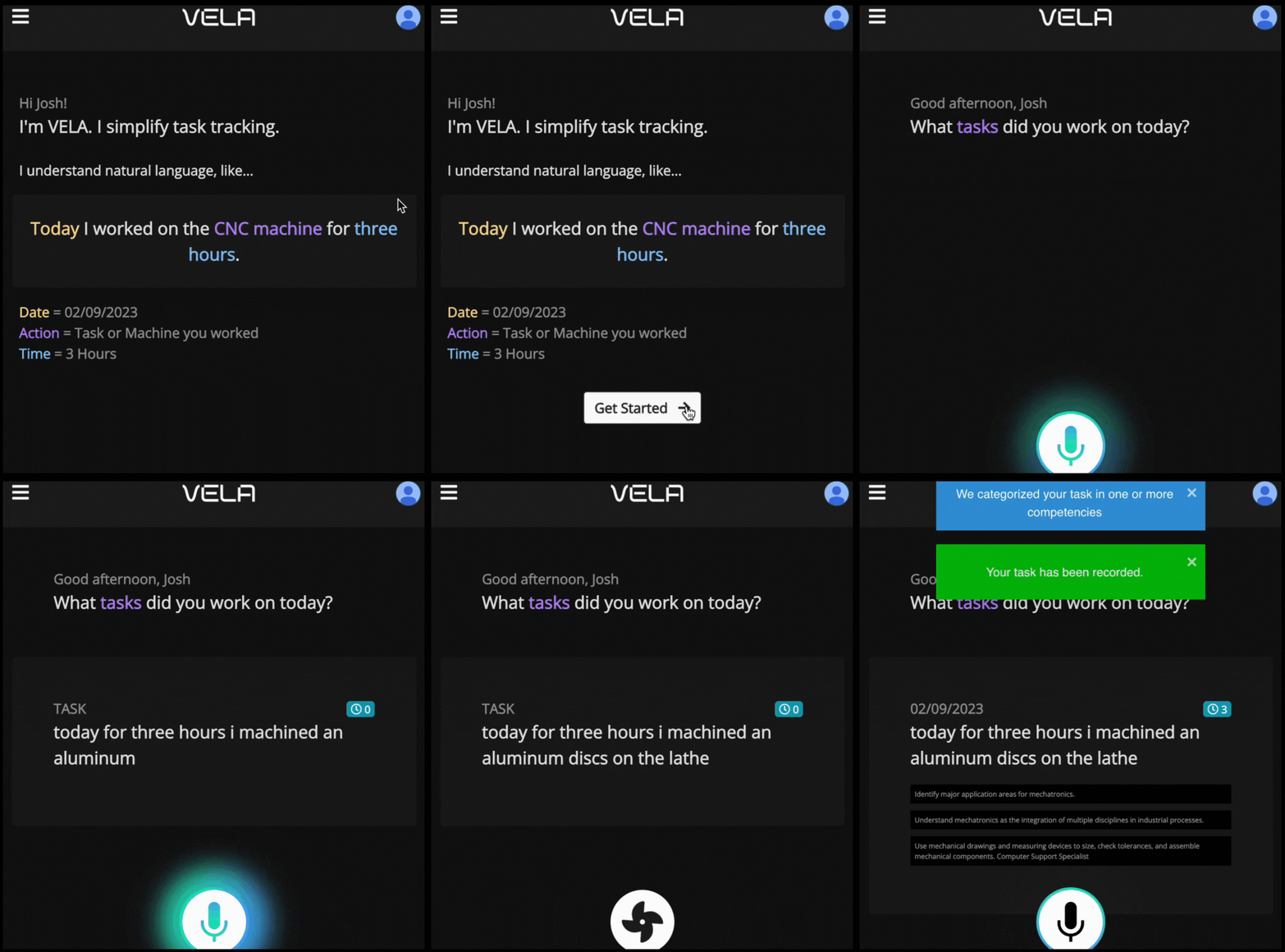
OJT Evidence Capture
Capture OJT with timestamps, source documentation, and supervisor verification. Every record links to auditable evidence.
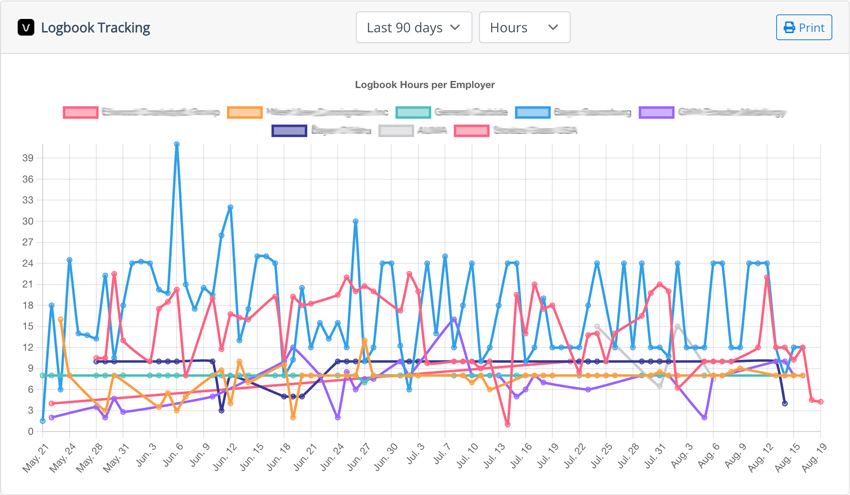
Data Quality Monitoring
Flag validation errors and missing fields before submission deadlines. Catch problems early, not at quarter-end.
RTI Tracking
Track RTI completion with validated records for MSG reporting. Evidence linked to credential attainment and skill gains.
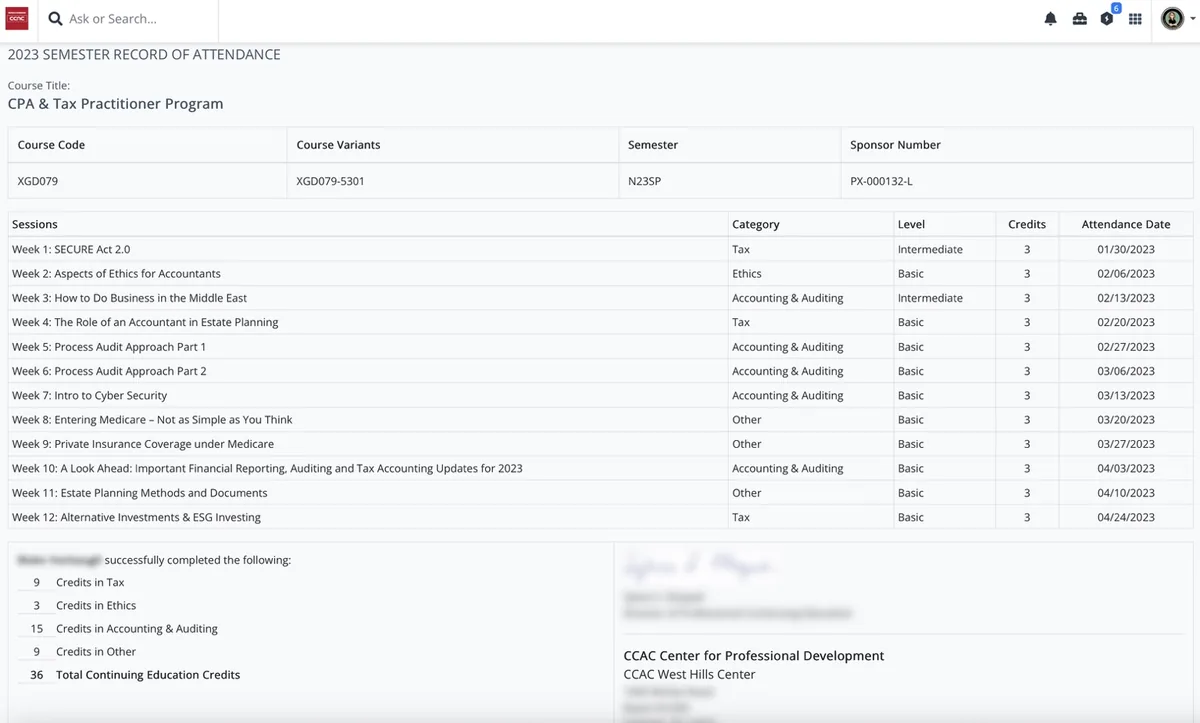
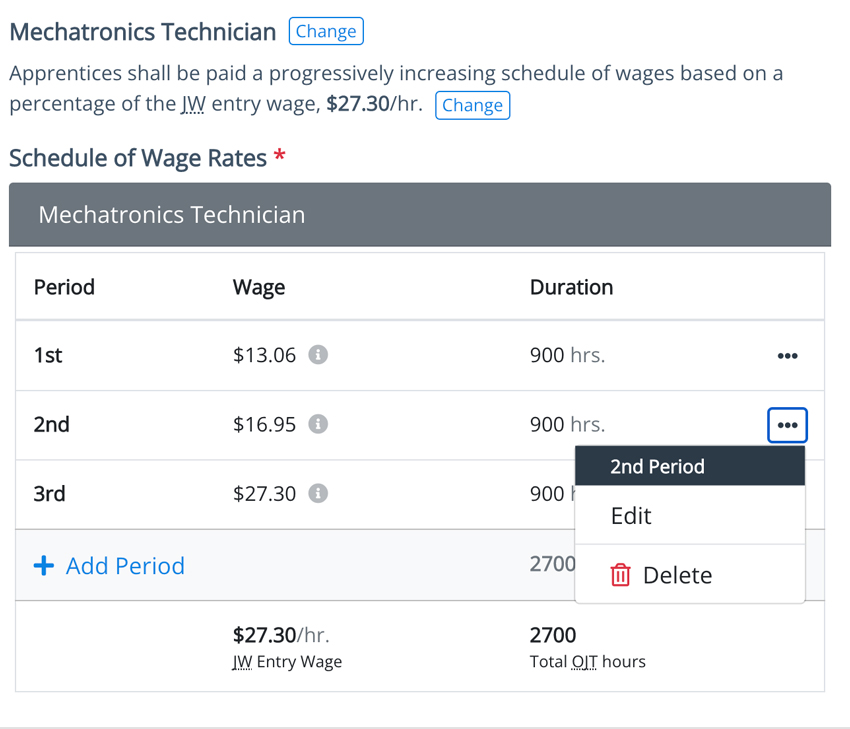
Audit-Ready Documentation
Every record includes source documentation, timestamps, and verification chain. Auditors see exactly where each number came from.
Submission-ready reports with source documentation
Generate logbooks, RAPIDS exports, and PIRL-ready reports from validated records with full source documentation for audit transparency.
Data Validation & Reporting Readiness
Capture clean data from day one
Enforce required fields and validation rules at entry. Every record meets schema requirements before entering your reporting pipeline.
Reporting Outcomes
Validated data, submission-ready exports, and audit-ready documentation.
Fewer Validation Errors
Required fields at intake reduce submission rejections and rework.
Faster Submission Cycles
Clean data throughout delivery means less quarter-end scramble and manual cleanup.
Audit-Ready Documentation
Every record links to source documentation with timestamps and verification.
Protected Funding
Credible reporting strengthens renewals and reduces findings.
See How Sponsors Report with Confidence
See how Apprentage validates data at intake and generates submission-ready reports.
Launch a New Apprenticeship in One Working Session
Guided by Turbine’s Managed AI team, Apprentage moves your program from setup to validated reporting in three focused hours.
Your program structure, competencies, partners, and reporting rules are configured in one governed workspace.
Sponsors, intermediaries, and employers who need a fast start without sacrificing reporting discipline.
Create the Program Shell
Start from the Training Program Dashboard. Create or clone a program, pull occupation data, and define core dates, hours, and employer participation.
Shape Competencies and Training
Import O*NET or approved frameworks, adjust competency groups and target hours, and connect the right LMS courses to the right pathway.
Add Partners and Validate Reporting
Assign RTI partners, invite employers and apprentices, map reporting fields, and validate the launch against RAPIDS, PIRL, and ETA-aligned requirements.
Monitor, Optimize, Expand
Track OJT, RTI, and competency progress in dashboards, produce routine reporting outputs, and expand to new occupations once the model is working.
Credible Reporting Unlocks Funding
If your team is still patching together spreadsheets, chasing missing records, and fixing reporting errors at quarter end, you are already paying for it through delayed reimbursements, weaker renewals, and avoidable scrutiny. Apprentage turns reporting into an asset instead of a funding risk.
Bad Reporting Gets Expensive Fast
When records are incomplete or unsupported, staff time gets burned on cleanup, leadership loses confidence in the numbers, and funders start asking harder questions.
Delays and Findings Put Real Dollars at Risk
Reporting gaps do not stay administrative for long. They lead to payment delays, corrective action, and weaker positioning when current funding is reviewed or future funding is awarded.
Apprentage Prevents the Quarter-End Scramble
Validation at intake, source-linked evidence, and shared records across sponsors, employers, and partners mean fewer surprises when it is time to submit.
The Safer Bet Is to Operationalize Reporting
Apprentage gives your organization a more defensible funding posture: cleaner submissions, stronger renewals, and a reporting system that can support growth instead of slowing it down.
Sources: A Big Bet on Apprenticeships in a Frozen Labor Market (RealClearEducation, Jan 2026); America Forward & AFA Pay for Success Policy Brief (Jan 2026); WIOA statute and Pennsylvania apprenticeship implementation practices.
Book a DemoEmbed Custom AI Assistants on Your Website
Get instant answers on apprenticeship compliance requirements, PIRL reporting standards, and WIOA guidelines. Pre-trained on federal regulations, state policies, and best practices to help sponsors and employers stay audit-ready.