



Distributed Upskilling
Turn every learner into a teacher. Scale skill development through peer-to-peer knowledge flow.
The most effective workforce development programs are multilateral and collaborative. Turbine's distributed upskilling framework captures expertise as it's shared, turning informal peer learning into structured, scalable training.
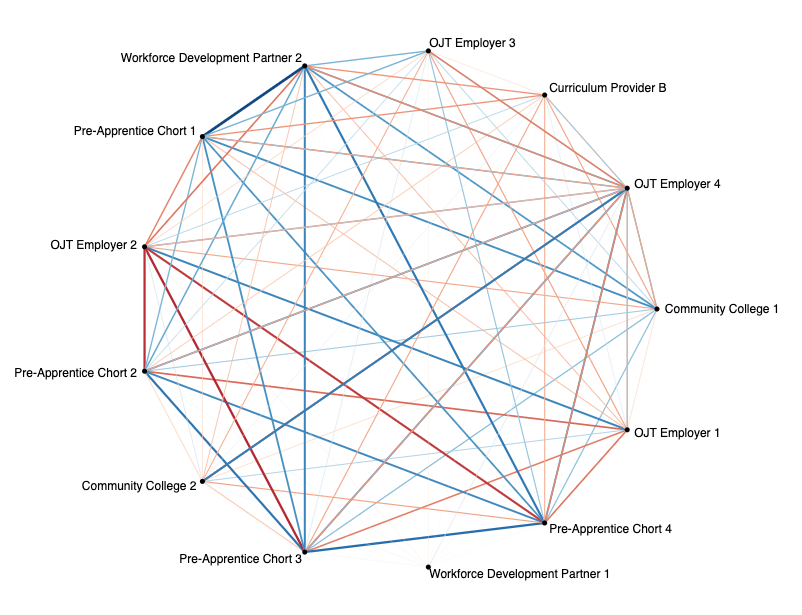
Bidirectional learning flow multiplies skill retention and knowledge capture
Core Principles
Why distributed upskilling outperforms traditional top-down training models.
Teaching Cements Learning
Research shows that people retain knowledge better when they teach it to others. Distributed upskilling turns every learner into a potential teacher, creating a multiplicative effect on skill retention.
Based on the "protégé effect" documented in cognitive science research
Peer Support Fills Gaps
Experienced-based peer mentors offer perspectives that formal instructors cannot. They speak from recent, relevant experience and understand the day-to-day challenges learners face.
Multilateral Collaboration
The most sustainable workforce development programs resemble consortium models—employers, training providers, and workers share responsibility and benefit from coordinated upskilling.
Knowledge Flows Both Ways
Traditional models push knowledge down from experts. Distributed upskilling enables bidirectional flow—field workers contribute insights that improve training for everyone.

Teaching to Remember
Cognitive science demonstrates that explaining concepts to others deepens understanding and retention—a phenomenon called the "protégé effect." When learners know they'll need to teach what they've learned, they process information more deeply and organize it more effectively.
Distributed upskilling operationalizes this insight. Turbine captures the teaching moments—through VELA voice logs, peer documentation, and mentorship records—and transforms them into structured knowledge that scales across the organization.
How Turbine Enables Distributed Upskilling
Every Turbine module contributes to capturing and scaling peer knowledge.
Capture peer knowledge as structured, retrievable content
- Document procedures as peers teach them
- Version and govern peer-contributed content
- Surface relevant expertise based on role and task
Transform field observations into training evidence
- Voice-capture learning moments in real time
- Attach evidence to competency milestones
- Share successful techniques across teams
Turn peer expertise into scalable courses
- Generate course content from captured knowledge
- Map peer contributions to skill frameworks
- Track who taught whom and measure outcomes
Activate peer knowledge through AI-powered Q&A
- Deploy assistants trained on peer-contributed content
- Cite specific contributors and their expertise
- Surface relevant peer experiences in context
Expected Outcomes
Documented results from organizations implementing distributed upskilling principles.
Learners who teach retain skills longer than passive recipients
Peer mentors accelerate practical skill acquisition
Field expertise that previously walked out the door stays documented
Peer learning creates ownership and connection
Industry Applications
Distributed upskilling adapts to any industry where experienced workers mentor newcomers.
Manufacturing Cross-Training
Experienced operators document procedures through VELA while training juniors. Their captured knowledge becomes the foundation for role-based courses and AI assistants.
Apprenticeship Programs
Journey-level workers mentor apprentices and capture OJT evidence. Their expertise flows back into RTI curriculum, making classroom learning more relevant.
Healthcare Onboarding
Experienced nurses document patient care procedures while precepting new hires. Institutional knowledge persists even as veteran staff retire.
Field Service Training
Technicians share troubleshooting techniques through peer networks. Best practices spread across regions faster than traditional top-down training.
Ready to Implement Distributed Upskilling?
Share your workforce development goals. We'll help you design a peer learning program that captures expertise, scales knowledge, and measures impact.